.jpg)
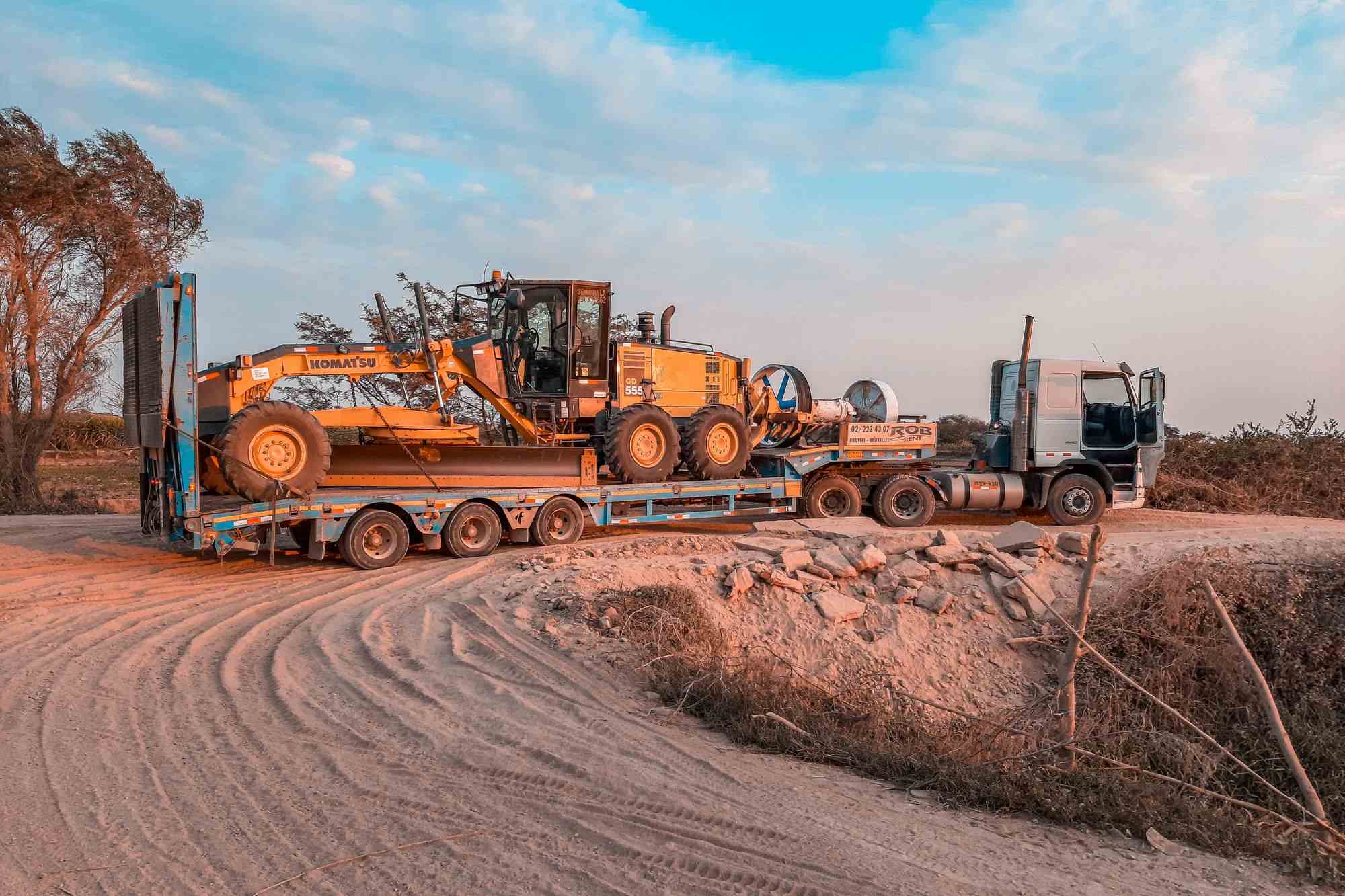
Oversize cargo is one of the most challenging areas of road logistics. Machinery, equipment, and structures that exceed standard dimensions require specialized vehicles and delivery conditions. Since their transportation involves risks to other road users and infrastructure, the sector is strictly regulated both in Ukraine and Europe.
Oversize cargo is considered cargo that, together with the vehicle (road train), exceeds the established maximum parameters in at least one indicator: length, width, height, weight, or axle load.
According to Ukrainian traffic regulations, the maximum parameters are considered exceeded when the dimensions are greater than:
Why is oversize delivery regulated so strictly? It can pose a danger to other drivers, create traffic jams, and damage road surfaces and infrastructure.
Inspections are carried out using several methods. The most common are automated WIM systems. They consist of sensors embedded in the road surface and cameras above the road. WIM weighs each axle, checks dimensions, and compares them with the applicable limits. In case of a violation, the camera records the vehicle’s license plate. Stationary GVК points and mobile checkpoints may also operate on the roads. In this case, inspectors measure the parameters manually.
A fine for oversize cargo by height exists because of the threat of damaging overpasses, breaking power lines, or affecting urban utilities.
When the width is exceeded, the cargo extends beyond the traffic lane and may force oncoming traffic aside, increasing the risk of collisions. A fine for oversize cargo by length (for example, wind turbine blades or pipes) is related to difficulties maneuvering on narrow sections, turns, and intersections.
Exceeding the axle load can result in damage to road surfaces of various types. As a rule, fines for weight overload are the highest.
Failure to comply with the rules leads to administrative liability. According to Article 132-1 of the Code of Ukraine on Administrative Offenses, the amount of fines depends on the percentage of the excess:
In the European Union, inspections are carried out by transport authorities, and fines are significantly higher than in Ukraine. That is why companies providing international logistics services must know the national requirements of transit countries precisely.
In Poland, the absence of permits for transporting oversize cargo results in a fine of PLN 1,500 to 5,000 depending on the category (EUR 340 to 1,140). In case of significant excess of the dimensions — PLN 15,000 (approximately EUR 3,300).
If a vehicle is transporting oversize cargo through Germany without a permit, the carrier company may face a fine of around EUR 380-425. In addition to financial penalties, traffic may be stopped until the violation is eliminated.
In commercial transportation, responsibility is distributed among the participants in the logistics chain. But who pays?
In Ukraine, penalty notices are issued to the owner of the vehicle — the transport company or sole proprietor. The carrier is responsible for having the necessary permits and selecting the tractor unit. The driver is personally responsible for complying with traffic regulations: installing signs, following the established route, and complying with police requirements. The shipper may also be held responsible if they incorrectly specified the weight or dimensions.
In Germany, control authorities may fine both the carrier and the logistics company for allowing the vehicle to use the route.
It is simpler than it seems — you need to follow the procedures established by law:
Sometimes escort vehicles with flashing beacons or patrol police are involved in transportation.
In Ukraine, a permit for the movement of an oversized vehicle is issued by an authorized unit of the National Police. The document is valid for 3 months; for regular shipments, a long-term permit can be obtained. The following are required:
The process differs somewhat in Europe. In Poland, permits are issued by the General Directorate for National Roads and Motorways (GDDKiA) or local district governors (depending on the road class). In Germany, permits are processed through the centralized VEMAGS system. The route and road train parameters are coordinated with the relevant road and police authorities.
Oversize logistics requires careful planning. A fine is not the main problem when transporting oversize cargo. If a vehicle carrying oversize cargo travels along an unsuitable route, it may be delayed, get into an accident, which can result in damage. The delivery of specialized goods should be entrusted to professional freight forwarders who minimize these risks.

.jpg)




 Valid: