Wholesale trade is the foundation of the goods market. Unlike retail (B2C), B2B businesses sell to other companies, individual entrepreneurs, or large retail chains. Wholesale sales have many specific features, from product selection to distribution methods.
Key Differences Between Wholesale and Retail
Instead of thousands of retail customers, you work with a smaller number of corporate clients. A business generates profit not through high markups but through supply volumes. Wholesale resale also requires more time for negotiations, contract signing, and coordination. However, unlike retail, customers are more likely to become long-term partners.
Why entering the wholesale market can be potentially profitable:
- scalability: one shipment can generate more profit than a month of retail sales;
- lower marketing costs: the industry relies on direct sales, tenders, networking, and trade show participation;
- resilience to crises: business customers purchase goods regularly.
When working in wholesale, you need to consider the investment required. Initial capital will be higher because you purchase larger quantities. If a product fails to attract demand, you may be left with unsold inventory.
Wholesale Business Ideas: What Is Profitable to Sell
In retail, you can catch a trend and make money from something viral. In wholesale, however, niches with high and stable demand are the best options:
- Household Chemicals and Hygiene Products: laundry detergents, cleaning products, wipes, and shampoos. These products are always in demand and serve a broad target audience, from distributors to cleaning companies and hotels.
- Electronics and Mobile Accessories: chargers, cables, screen protectors, and headphones. Demand for gadgets is growing due to frequent model updates and repair needs. Moreover, this niche is not the easiest for independent importing because of technical regulations and warranty issues.
- Textiles and Bedding: blankets, pillows, and towels. Hotels, hostels, tourist accommodation providers, and retail stores actively purchase this category.
- Toys and Children's Products. This segment involves complex customs clearance. Individual entrepreneurs, retail chains, and distributors are willing to purchase products that have already been imported into the country with the required certification.
Wholesale business ideas are not limited to mass-market products. There is significant potential in specialized niches:
- Automotive Chemicals and Detailing. Shampoos, polishes, microfiber cloths, and protective coatings — your customers may include auto repair shops, car washes, and other distributors.
- Beauty Industry Consumables. Nail technicians, permanent makeup artists, and brow specialists need disposable sheets, gloves, dyes, drill bits, and other consumables.
- 3D Printing Components. Various plastics, photopolymer resins, and spare parts are in demand in small-scale manufacturing and modeling.
- Grooming and the Pet Industry. Your customers may include grooming salons, independent groomers, breeders, and veterinary clinics. The product range is extensive: grooming tools, hygiene products, pet food, and even dog perfumes.
- Eco-Friendly Packaging for HoReCa. This category includes disposable cups, plates, kraft paper bags, and lunch boxes. Demand is growing due to the popularity of delivery services and catering.
Wholesale business ideas are limited only by your entrepreneurial drive.
Specifics of Wholesale Trade in Goods from China
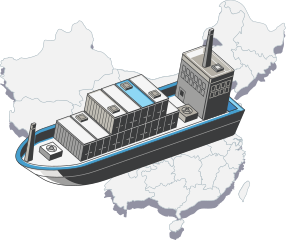
The Chinese market remains the main destination for wholesale purchasing, but it has its own specifics. The advantages of working with China include:
- cost price — wholesale or factory prices that allow businesses to compete in the Ukrainian market;
- a wide variety of products and customization options;
- well-developed infrastructure for shipping to any part of the world.
The disadvantages include:
- a high entry threshold: factories often work with high MOQs, requiring significant initial capital;
- the risk of defective products, even from reliable suppliers;
- complex logistics and customs clearance.
In the B2B segment, your business becomes a supplier, so customers will be particular about product quality and pricing.

Where to Find Reliable Suppliers
B2B marketplaces are the first place to look, as they bring together thousands of factories and trading companies. Depending on the niche, you can search for products on Alibaba, Global Sources, Made-in-China, and 1688. Before signing a contract, make sure to verify the supplier's status, read reviews, and order samples.
Another option is Taobao. Although it is a retail and small-wholesale marketplace, wholesalers use it to quickly test niches, find new products, or purchase trial batches. Keep in mind that not all suppliers offer international logistics services. You will most likely need a logistics company to deliver your cargo to Ukraine.
Calculating Wholesale Business Profitability
To make your business profitable, you will need to carefully monitor your financial indicators. Let's start with the basic terms:
- Markup — the amount or percentage added to the cost price. For example, if you buy one unit from a supplier for UAH 100 and sell it for UAH 150, the markup is 50%.
- Gross Margin — the share of net revenue remaining after deducting the cost of goods sold. Margin is expressed as a percentage of the selling price. In the example above, the margin is (150 - 100) : 150 = 33.3%.
- Profit — the net profit remaining after deducting all expenses, including taxes and logistics costs.
- Capital — the total funds and assets required to launch and maintain business operations. In wholesale, capital is tied up in inventory.
It may seem that wholesale sales are easier than retail. Despite certain cost savings, operating expenses still exist. The largest investments go into:
- purchasing and importing goods;
- renting warehouse space for storage;
- payroll (loaders, warehouse managers, accountants);
- taxes and administrative expenses.
Another specific feature of wholesale trade is the time required to close a deal. In retail, you can receive regular sales and count on stable turnover. In wholesale, however, when a deal can take weeks to close, you need to monitor inventory and plan supplies in a completely different way.
A wholesale business idea is not just about finding a niche that will attract customers. To maintain turnover, you need to develop a sales strategy and, just as importantly, determine the optimal investment amount. Unlike retail, the key factors are not trends but regular supplies, efficient logistics, and understanding exactly what B2B customers need.




.jpg)



 Valid: