
Freight transportation is one of the “dirtiest” industries in terms of carbon emissions. At the same time, the growth of e-commerce with fast delivery does not allow businesses to abandon vehicle fleets and air freight. That is why sustainability has become an important topic, and more and more principles of green logistics are gradually being implemented in transportation.
Green logistics is a strategy for optimizing all processes (from raw material procurement to delivery to the end consumer) in order to reduce the environmental footprint. For a long time, freight transportation depended on fossil fuels, which generate huge amounts of emissions both during extraction and use.
The transition to new “green” standards is an attempt to use fewer planetary resources and avoid a climate crisis. For international trade, this is a serious challenge: it is important not only to avoid harming the environment, but also to maintain quality and speed.
The concept is based on several principles:
Simply put, eco-logistics aims to make the system as environmentally friendly as possible.
Companies such as Shein and Temu ship millions of parcels every day. The total emissions of a single company in 2025 nearly matched those of small European countries such as Serbia. Of course, the carbon footprint depends not only on the transportation method but also on production.
New environmental standards have become a subject of discussion. The transition is associated with major costs. Companies providing international logistics services face serious challenges.
However, eco-standards actually provide significant long-term advantages:
On the one hand, green logistics requires investment at the start. On the other hand, it proves financially beneficial in the long run.
The future of green transportation is being built on innovations that are already being tested on highways, at sea, and in the air.
Automotive giants Volvo Trucks and Mercedes-Benz are introducing electric trucks. At the same time, hydrogen technologies are being developed to move away from traditional fuel.
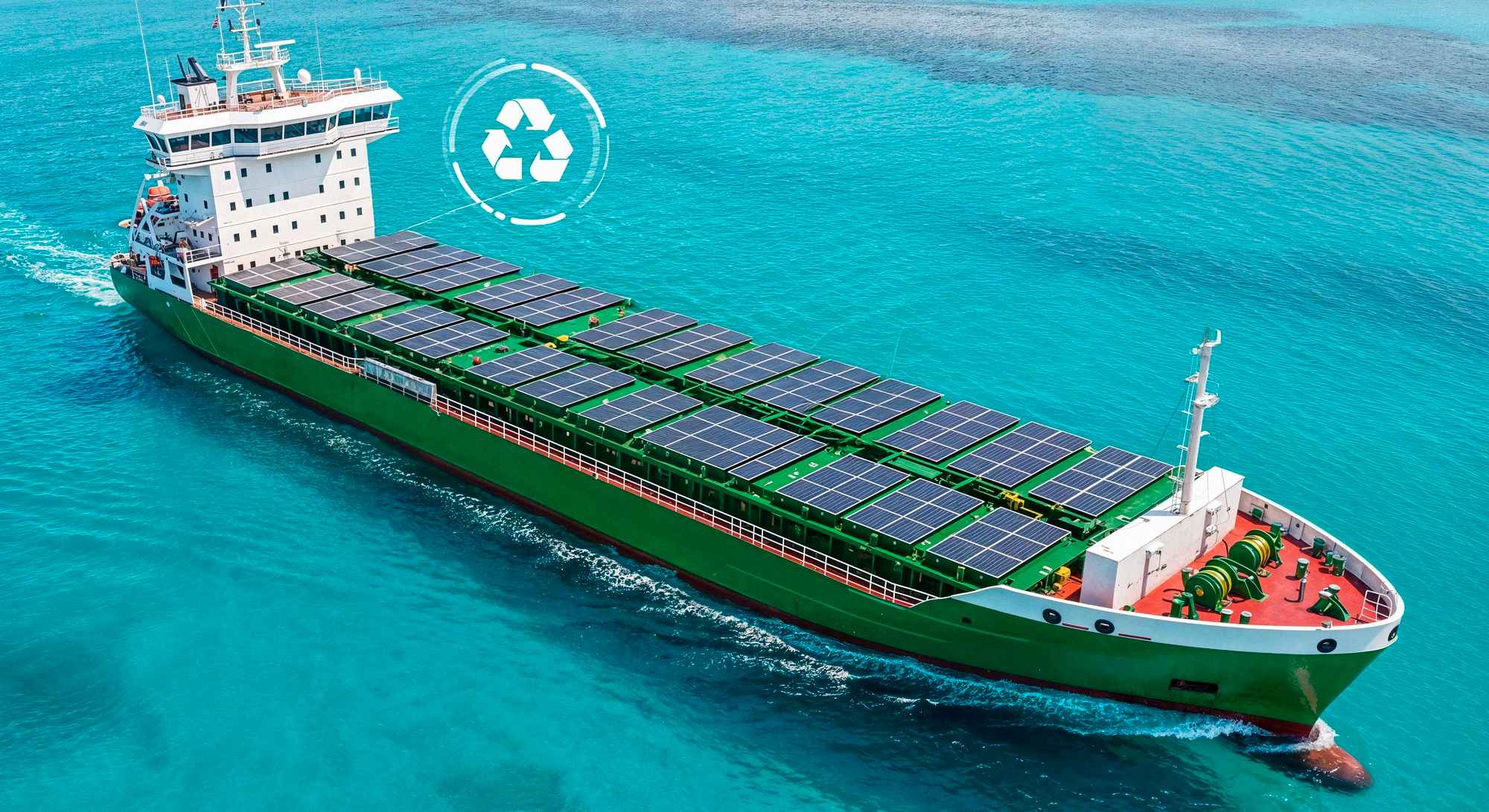
The world’s first zero-emission autonomous container ship has also appeared — Yara Birkeland. One such vessel prevents 1,000 tons of carbon dioxide emissions annually. Traditional container ships are also being modernized by installing wind turbines and solar panels as alternative energy sources. Even reducing speed by 10% positively affects the ecosystem by lowering fuel consumption by 20-30%.
Innovations are also expected in air freight. American company Eviation is developing the first electric cargo aircraft. Even now, major attention is being paid to maximizing cargo flight loads and using small aircraft for medium-distance routes.
Technology also plays an important role in eco-logistics:
Sustainable results directly depend on coordinated actions by governments, private companies, and environmental organizations.
The main reason for delays in implementation is high startup costs. Logistics companies are forced to invest in electric vehicles, charging stations, and software purchases. Small and medium-sized businesses also note high costs when switching to eco-friendly packaging. In trade, it is extremely important to maintain a balance between investment and profitability.
Other challenges include:
In Ukraine, green logistics will face challenges related to post-war recovery priorities. Simply put, the economy will be considered more important than environmental issues. However, there are already projects aimed at reducing the carbon footprint of transportation.
Although resources can be renewable, humanity consumes far more than nature can restore. This has a global impact on climate and public health. By 2050, the world aims to achieve full climate neutrality. This will provide:
Green logistics is not just a trend but a strategy for reducing the environmental impact of human activity. The world cannot function without freight transportation, but new standards will make it cleaner, more cost-effective, and more efficient.
Green logistics is an approach to transportation and supply chain management aimed at reducing environmental impact, lowering CO₂ emissions, and improving resource efficiency.
It helps optimize transportation routes, reduce fuel costs, strengthen brand reputation, and comply with modern environmental standards.
Common solutions include cargo consolidation, multimodal transportation, eco-friendly vehicles, process digitalization, and reducing excessive packaging.
Yes. Even small companies can lower costs and reduce their environmental footprint through route optimization, shared shipments, and efficient supply chain planning.







 Valid: