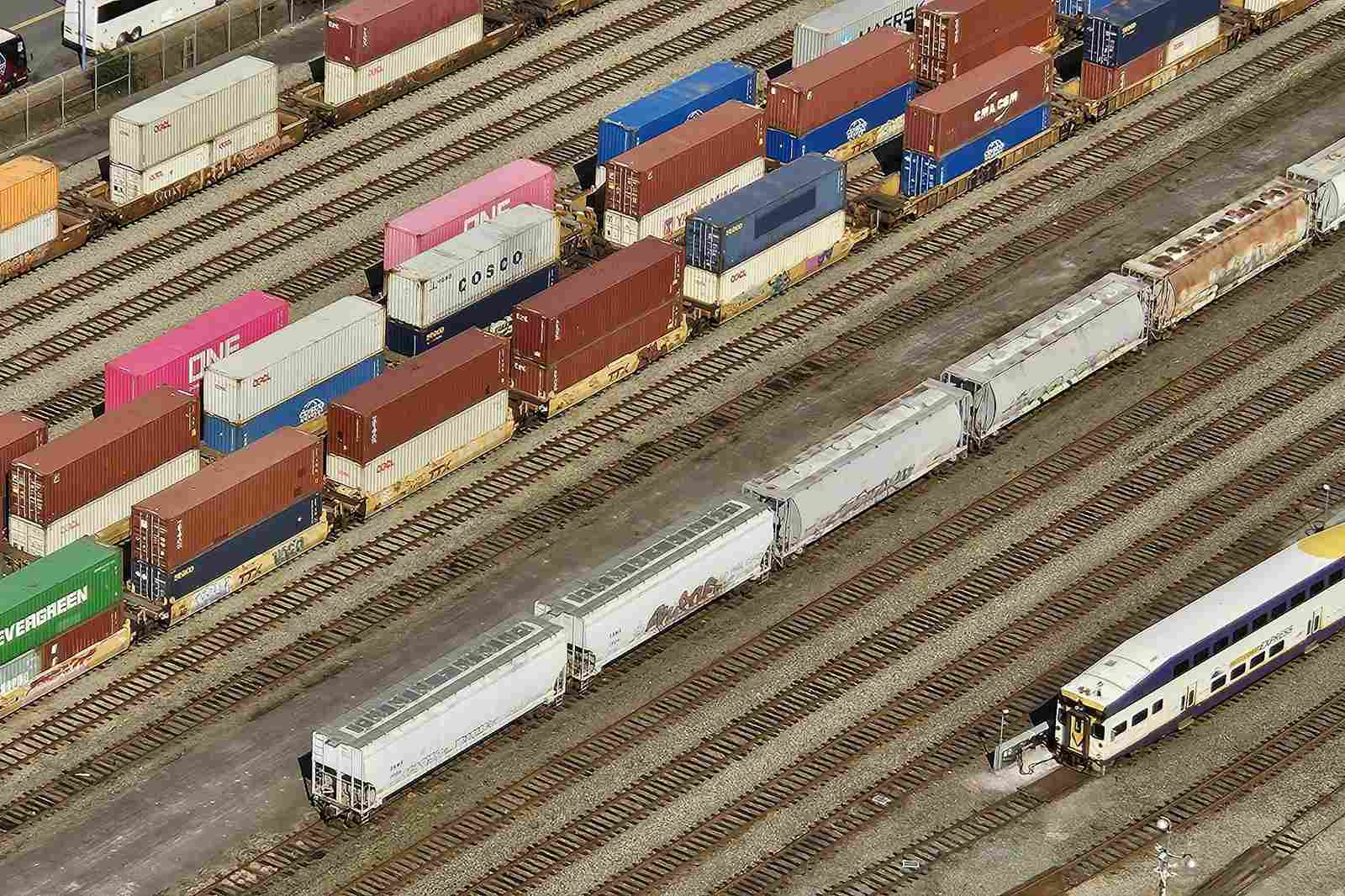
Rail transport is often considered the “golden middle” between sea and air freight. However, modern logistics has no universal solutions. Below we explain the key disadvantages of railway transportation, who it may be suitable for, and what issues may arise during shipment.
The first major drawback of rail transport is its strong dependence on fixed infrastructure. Trains operate strictly on tracks, passing through terminals and stations, which leads to two main challenges:
Sea freight has similar issues, particularly with last-mile delivery, but its dependency shifts from routes to port infrastructure, where delays usually occur.
Rail transport depends on external factors beyond the control of shippers or freight forwarders, such as:
Speed is another drawback. Rail is slower than air freight and affected by numerous factors, including speed limits and planned or unplanned stops.
Rail tariffs are also relatively high due to costly infrastructure maintenance. In Ukraine, monopoly conditions limit carrier choice, while globally the rail sector remains highly regulated with low competition.
Since door-to-door delivery is impossible, rail transport is typically multimodal, especially on international routes such as Europe–Ukraine or China–Ukraine.
First issue — different track gauges between the EU and Ukraine. Limited standard-gauge sections mean most cargo requires transshipment, increasing the risk of damage.
Second issue — limited tracking. Compared to sea and air freight, rail tracking systems are less advanced, with delayed status updates.
Despite its drawbacks, rail transport is optimal in certain cases:
Rail transport should be chosen strategically, mainly for large, heavy, or oversized shipments over long distances where no faster or cheaper alternatives exist.
Clients often ask why we don’t work with rail transport. At DiFFreight, we prioritize predictability and control. For most clients, rail loses to air and sea alternatives.
We recommend air freight for speed and sea freight for cost optimization. Consolidation options allow shipments from 50 kg — a scenario rarely cost-effective for rail transport.
In wartime conditions, we developed reliable multimodal routes with last-mile delivery: air + truck or sea + truck. This approach reduces costs, minimizes handling risks, and ensures timely customs clearance.
Logistics is about choosing the optimal path. We guarantee efficient air and sea routes from China, the USA, Canada, and Europe. Contact us for a consultation — we’ll design a solution that ensures cargo safety and on-time delivery.
Key drawbacks include limited last-mile delivery, high dependence on infrastructure, significant capital investment, and a limited number of carriers.
Rail freight usually requires large shipment volumes and lacks door-to-door delivery, making it less flexible and more complex for small shipments.
Common risks include station delays, potential cargo damage, and strict scheduling constraints. Route changes can also be difficult to implement quickly.
Rail is less flexible than road transport and slower than air freight, so it is best suited for large-volume shipments over medium to long distances.





 Valid: